Best Hair Loss Treatments 2026 — Finasteride, Minoxidil, Dutasteride, Shampoos & Combination Therapy
Hair loss treatments in 2026 range from topical solutions like Minoxidil to prescription medications such as Finasteride and Dutasteride. The best option depends on your pattern of hair loss, goals, budget, and tolerance for side effects.
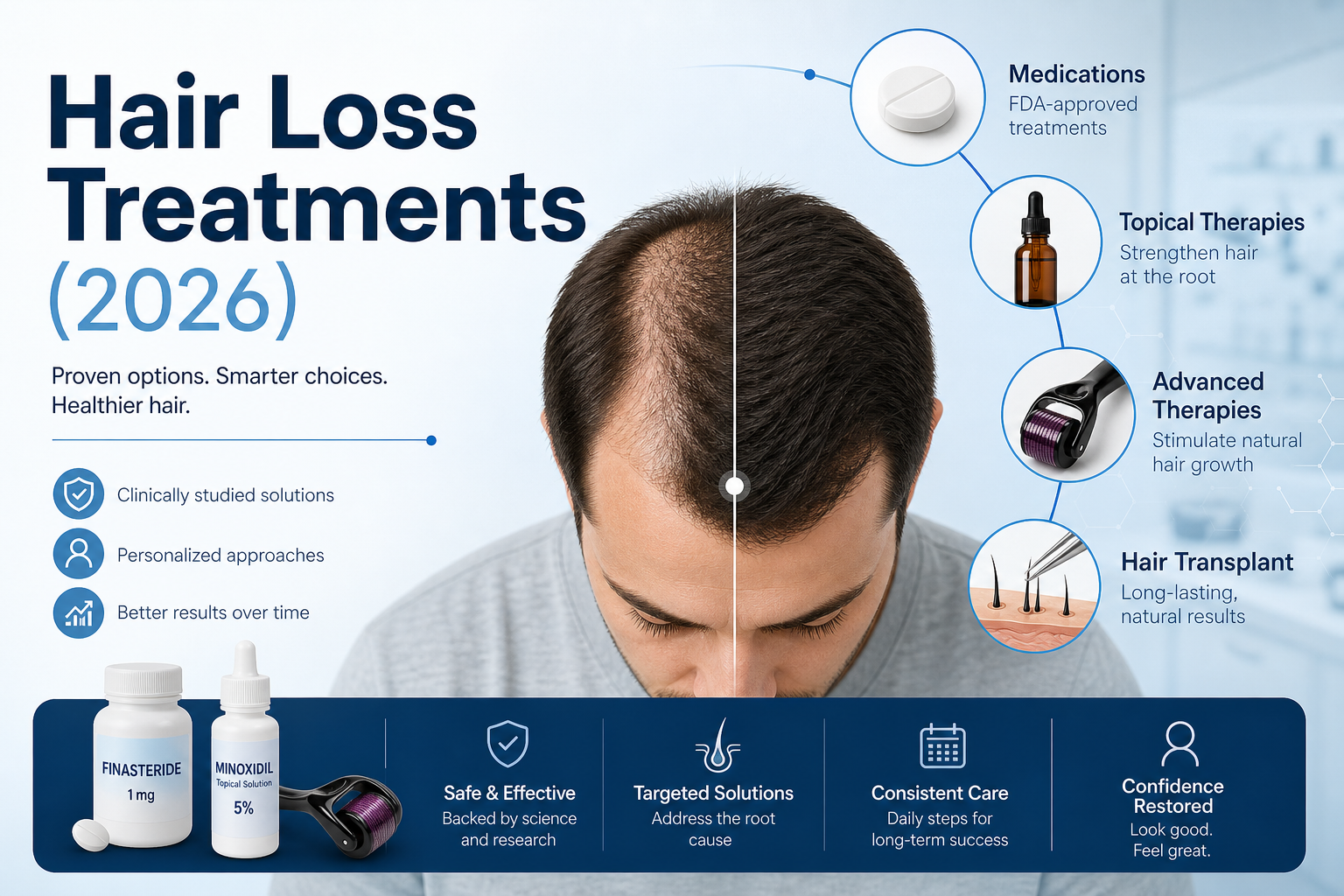
Which Hair Loss Treatment Works Best?
There is no universal “best” treatment for everyone. Some options focus on blocking DHT, the hormone strongly linked to male pattern baldness, while others stimulate hair growth directly.
- Best for male pattern baldness: Finasteride / Propecia
- Best for regrowth support: Minoxidil / Rogaine
- Stronger DHT blocker: Dutasteride / Avodart
- Best combined approach: Finasteride + Minoxidil
- Budget option: Generic medications
Hair Loss Comparison Guides
Top Hair Loss Treatments Explained
Finasteride
Learn MoreOne of the most common oral treatments for men. Works by reducing DHT levels and is often considered a first-line option for male pattern hair loss.
Minoxidil
Learn MoreApplied topically to stimulate follicles and prolong the growth phase. Commonly used by both men and women.
Dutasteride
Learn MoreA stronger DHT blocker than Finasteride. Often considered when stronger suppression or improved maintenance is desired.
Rogaine
Learn MorePopular brand-name Minoxidil product available in foam or liquid form for topical hair regrowth support.
Propecia
Learn MoreBrand-name Finasteride 1 mg commonly prescribed for male pattern hair loss.
Avodart
Learn MoreBrand-name Dutasteride product known for potent DHT reduction and long half-life.
Compare Hair Loss Treatment Providers
Check consultations, pricing, treatment plans, subscriptions, and delivery options online.
Compare OffersFAQ
What is the most effective hair loss treatment?
For many men with androgenetic alopecia, Finasteride is considered one of the most effective medical options. Combination therapy with Minoxidil may improve results.
Can women use hair loss treatments?
Yes. Minoxidil is commonly used by women. Other treatments depend on medical guidance.
How long until results appear?
Most treatments require 3–6 months of consistent use before visible changes.
Do results stop after discontinuation?
Usually yes. Benefits often decline after stopping treatment.
References
Informational content only. Not medical advice.