Rogaine (Minoxidil) vs Dutasteride 2026 — Effectiveness, Speed, DHT Blockade & Safety
Two widely used hair loss treatments for androgenetic alopecia. Rogaine is a topical minoxidil product that helps stimulate follicles, while Dutasteride works internally by strongly reducing DHT levels. The better option depends on goals, tolerance, and treatment preferences.
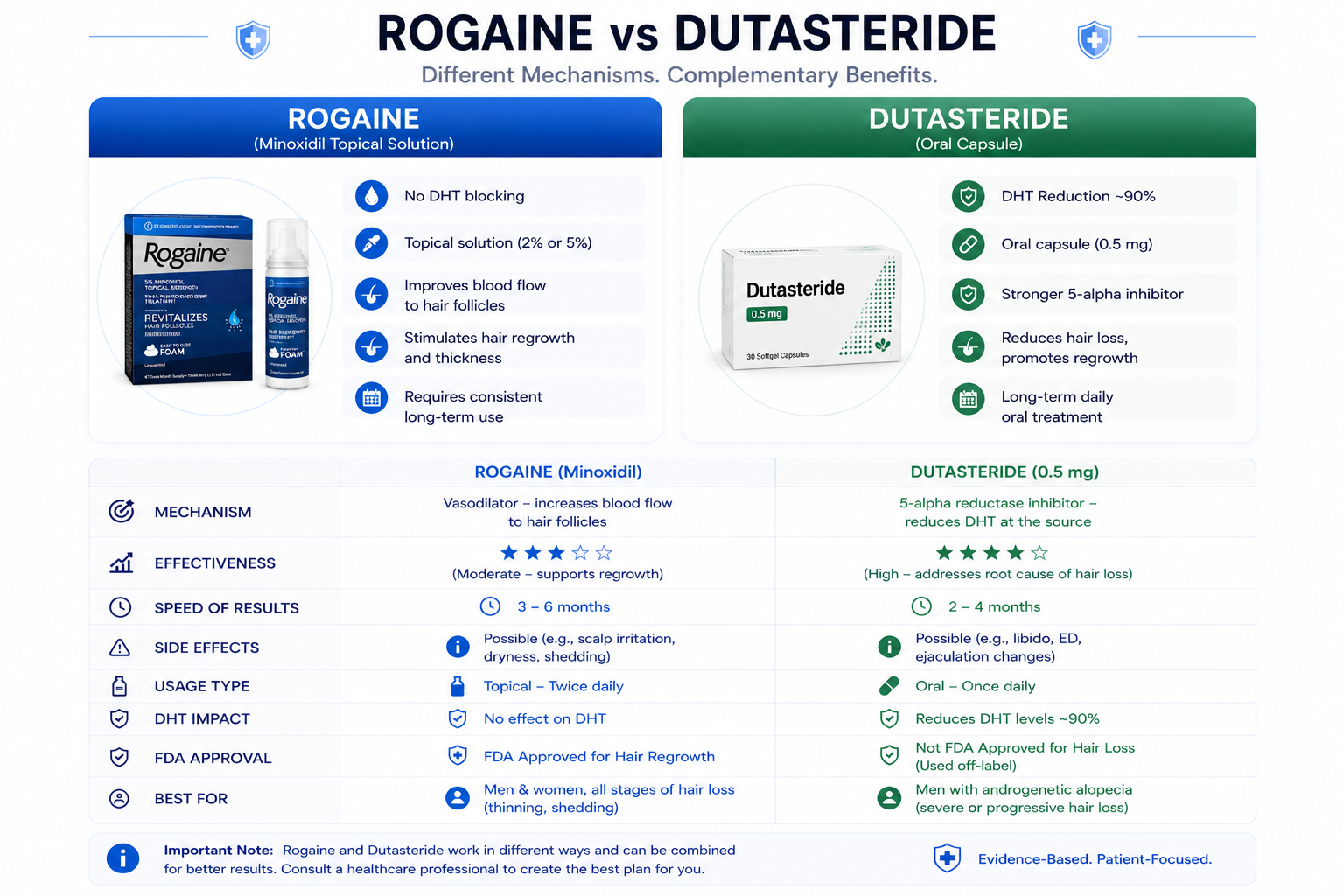
Quick Comparison
| Feature | Rogaine | Dutasteride |
|---|---|---|
| How it Works | Stimulates follicles and prolongs growth phase | Blocks conversion to DHT very strongly |
| Form | Topical foam / liquid | Oral capsule |
| Best For | Men and women with thinning hair | Mainly men needing stronger DHT suppression |
| Time to Results | 3–6 months | 3–6 months |
| Main Side Effects | Scalp irritation, shedding phase | Sexual side effects, hormonal effects |
| Use Together? | Often combined in advanced treatment plans | |
When Rogaine May Be Better
Rogaine may suit people who prefer a non-hormonal option or want a treatment available without prescription in many regions. It is commonly used for crown thinning and density support.
- No hormonal mechanism
- Available over the counter in many countries
- Often used by men and women
- Easy to combine with oral treatments
When Dutasteride May Be Better
Dutasteride may be preferred when stronger DHT suppression is desired, especially for progressive male pattern hair loss that has not responded enough to milder options.
- Very strong DHT reduction
- Often used for advanced thinning
- Simple oral dosing
- Useful for long-term maintenance under medical guidance
Can You Use Them Together?
Yes. Many users combine Rogaine and Dutasteride because they work through different mechanisms. Dutasteride lowers DHT internally, while Rogaine helps stimulate growth externally.
Combination therapy is common when users want stronger retention and regrowth potential. Medical supervision is recommended.
Compare Hair Loss Treatment Providers
Review pricing, availability, consultations, and treatment options online.
Compare OffersFAQ
Which works better: Rogaine or Dutasteride?
Dutasteride is often considered stronger for male pattern baldness because it targets DHT aggressively. Rogaine remains highly useful, especially in combination.
Can women use Dutasteride?
Use depends on medical guidance and local regulations. Rogaine is more commonly used in women.
Do results disappear if treatment stops?
Usually yes. Hair gained or preserved often declines after discontinuation.
Is combining them best?
For many users, combining both may offer stronger results than either alone.
Informational content only. Not medical advice.