Propecia (Finasteride 1 mg) vs Proscar (Finasteride 5 mg) 2026 — Uses, Dosage, Safety & Key Differences
Propecia and Proscar both contain finasteride, but they are designed for different purposes. Propecia is a low-dose version used for hair loss, while Proscar is a higher-dose medication originally intended for prostate enlargement. Understanding the difference is important for safe and effective use.
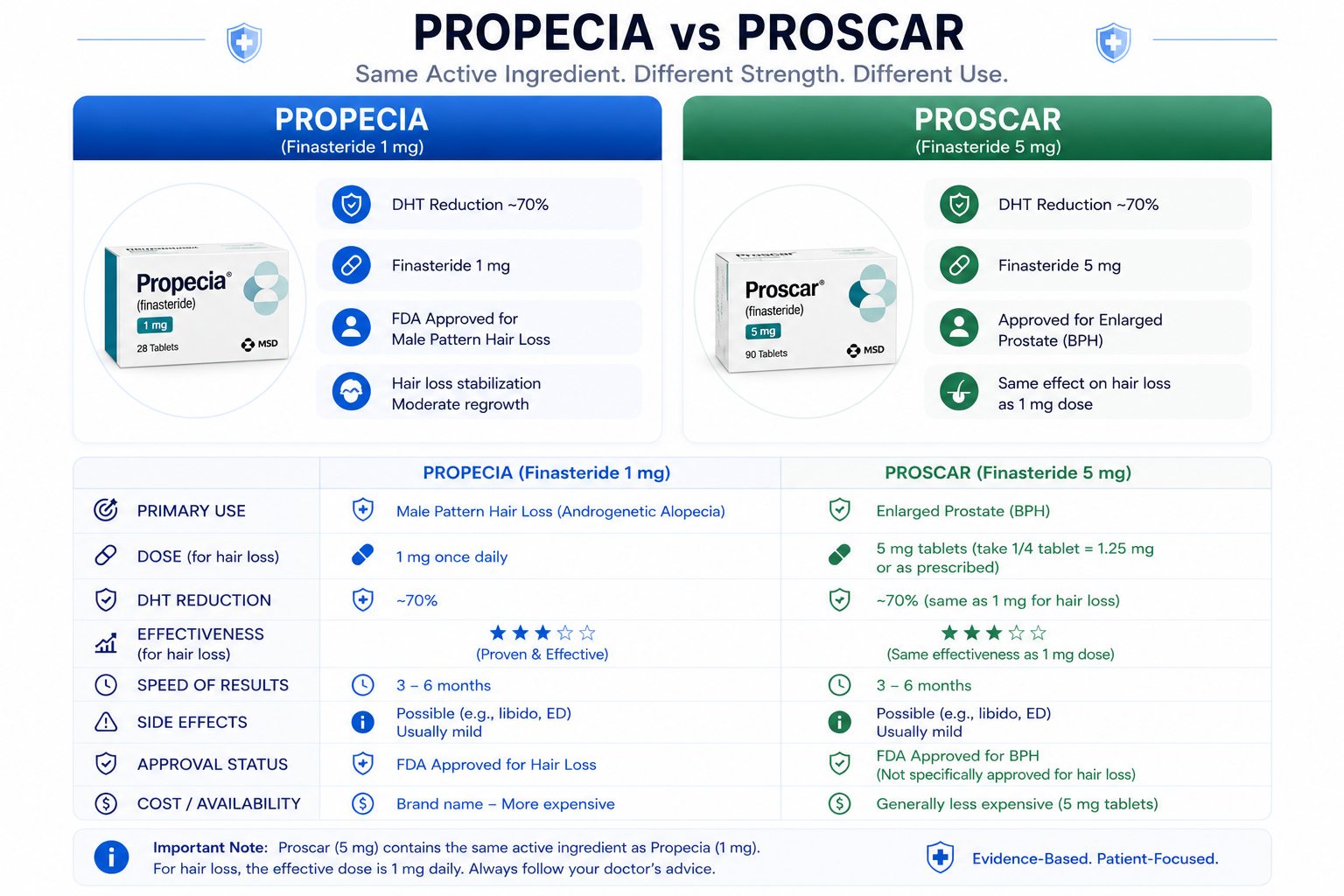
Quick Comparison
| Feature | Propecia | Proscar |
|---|---|---|
| Active Ingredient | Finasteride | Finasteride |
| Dosage | 1 mg | 5 mg |
| Approved Use | Male pattern hair loss | Benign prostatic hyperplasia (BPH) |
| How it Works | Reduces DHT to slow hair loss and support regrowth | Reduces DHT to shrink enlarged prostate tissue |
| Form | Oral tablet | Oral tablet |
| Use for Hair Loss | Specifically designed and clinically approved | Sometimes used off-label (tablet is often split) |
| Side Effects | Decreased libido, sexual side effects (rare) | Similar finasteride-related side effects |
| Convenience | Once-daily 1 mg dose | Requires splitting for hair-loss dosing |
When Propecia May Be Better
Propecia is specifically formulated and approved for male pattern hair loss. It provides a convenient low-dose finasteride option without the need for tablet splitting.
- Designed specifically for hair loss
- Simple 1 mg daily dosing
- Clinically studied for androgenetic alopecia
- No dose adjustment needed
When Proscar May Be Better
Proscar contains the same active ingredient but at a higher dose. Some users repurpose it for hair loss by dividing tablets into smaller doses.
- Lower cost per mg in some regions
- Same active ingredient (finasteride)
- Can be split into smaller doses
- Originally designed for prostate treatment
Are They the Same Drug?
Yes. Propecia and Proscar both contain finasteride. The key difference is dosage and approved use. Propecia is 1 mg for hair loss, while Proscar is 5 mg for prostate conditions.
Because of this, some users adjust Proscar dosing to approximate Propecia levels, but medical guidance is recommended before making changes.
Compare Hair Loss Treatment Options
Learn more about finasteride-based treatments and available providers online.
Compare OffersFAQ
Is Propecia the same as Proscar?
They contain the same active ingredient (finasteride), but differ in dosage and approved use.
Can Proscar be used for hair loss?
It is sometimes used off-label for hair loss, usually by splitting tablets into smaller doses.
Which is better for hair loss?
Propecia is generally preferred because it is specifically designed and dosed for hair loss treatment.
Do they have the same side effects?
Yes. Both contain finasteride, so potential side effects are similar.
Informational content only. Not medical advice.