Fincar (Finasteride 5 mg) vs Finpecia (Finasteride 1 mg) 2026 — Effectiveness, Dose Differences, Safety & Cost
Both Fincar and Finpecia contain finasteride, a medication commonly used to reduce DHT levels linked to androgenetic alopecia. The main difference is usually tablet strength, intended use, and convenience rather than the active ingredient itself.
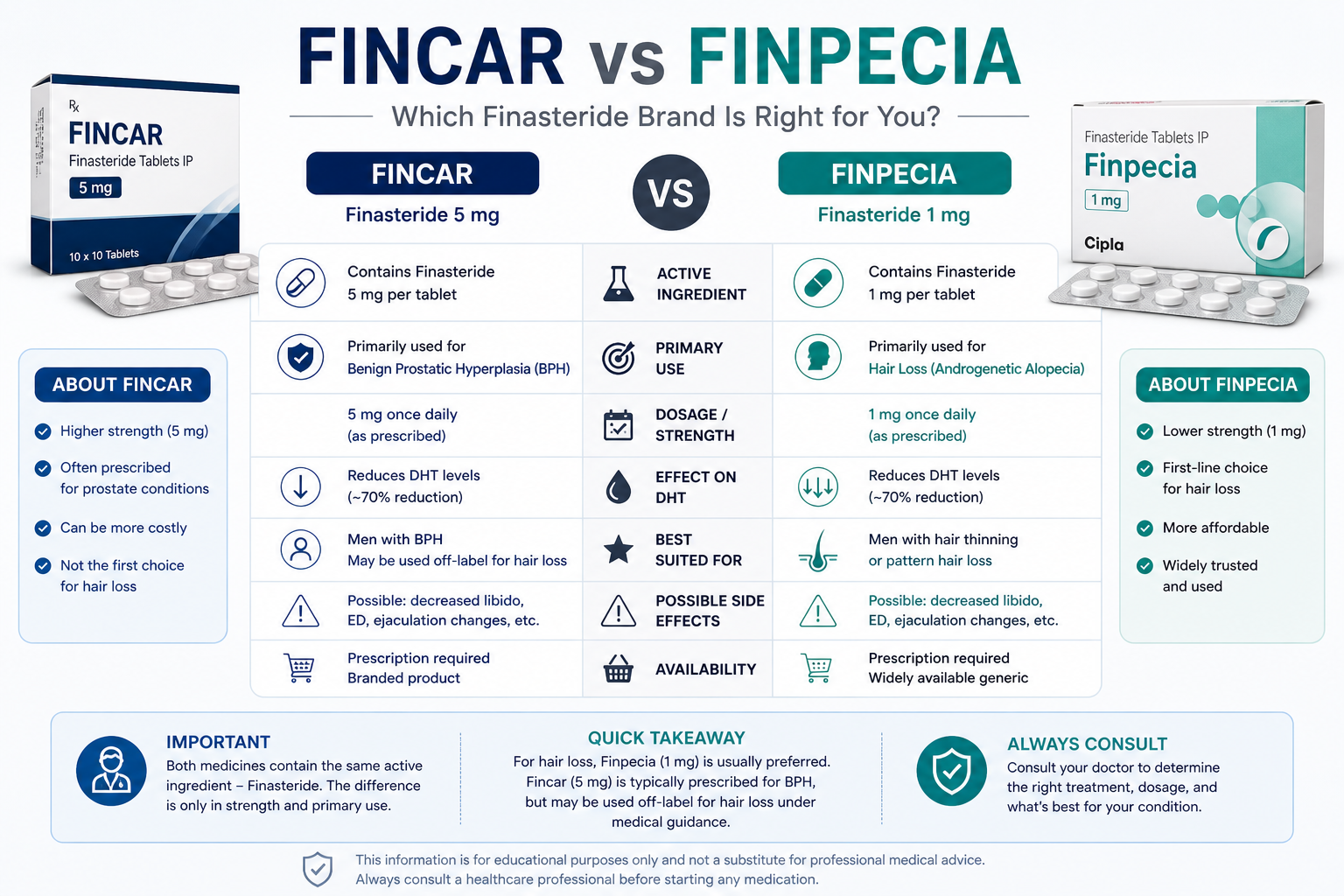
Quick Comparison
| Feature | Fincar | Finpecia |
|---|---|---|
| Active Ingredient | Finasteride | Finasteride |
| Common Strength | 5 mg | 1 mg |
| Main Use | BPH / off-label hair loss use | Hair loss use |
| How it Works | Reduces DHT levels | Reduces DHT levels |
| Convenience | Often split into smaller doses | Usually ready-to-use 1 mg tablet |
| Main Side Effects | Possible sexual, hormonal, or mood-related effects in some users | |
When Fincar May Be Better
Fincar may appeal to users looking for a lower-cost option, especially where 5 mg tablets are commonly divided into smaller doses.
- Often economical per tablet
- Same active ingredient: finasteride
- Can be split into multiple doses
- Common generic option in many markets
When Finpecia May Be Better
Finpecia is commonly chosen for hair loss because the 1 mg strength is typically more convenient for daily androgenetic alopecia treatment.
- Designed around hair loss dosing
- No tablet cutting for many users
- Simple once-daily use
- Popular international brand
What Is the Real Difference?
In many cases, the biggest difference is not effectiveness but dosage format. Since both products contain finasteride, results may be similar when the same equivalent dose is taken consistently.
Users often choose based on convenience, tablet splitting preferences, availability, and total monthly cost.
Compare Hair Loss Treatment Options
Review pricing, consultations, delivery options, and treatment plans online.
Compare OffersFAQ
Which works better: Fincar or Finpecia?
If the finasteride dose is equivalent, effectiveness may be similar. The main difference is tablet strength and convenience.
Why is Fincar often cheaper?
Because it is commonly sold as a 5 mg tablet, users may divide tablets, lowering the cost per daily dose.
Is Finpecia easier to use?
Many users prefer Finpecia because 1 mg tablets are typically ready to use without splitting.
Can results disappear after stopping?
Usually yes. Hair preserved or regrown often declines after discontinuation.
Informational content only. Not medical advice.