Best Hair Loss Treatments 2026 — Top Options, Results, Safety & Effectiveness Compared
Hair loss treatment works best when matched to the cause of thinning. For androgenetic alopecia, the strongest evidence usually supports Finasteride, Minoxidil, and combination therapy. Other options may help depending on goals, tolerance, and stage of hair loss.
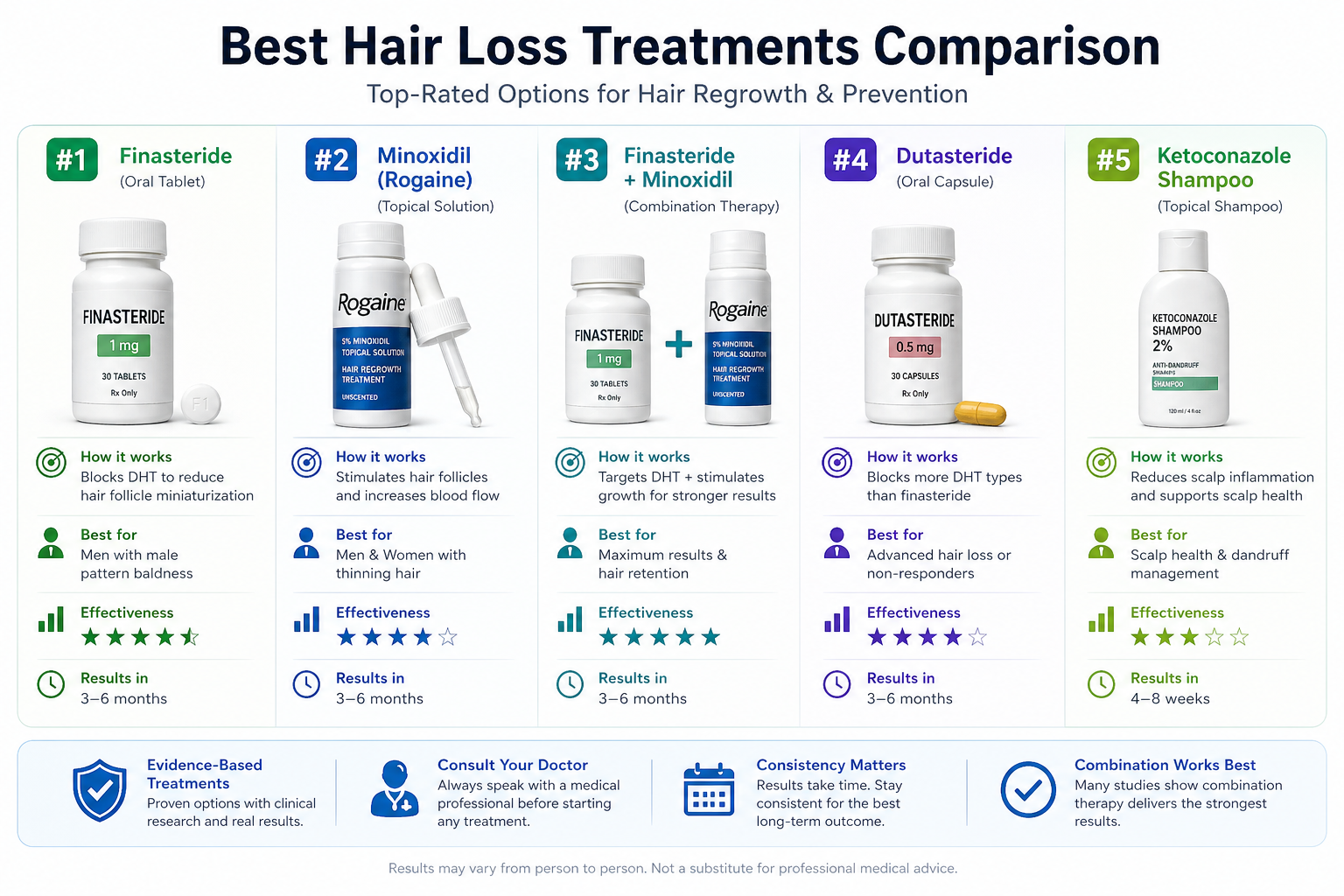
Quick Rankings
| Rank | Treatment | Best For | Main Advantage |
|---|---|---|---|
| #1 | Finasteride | Male pattern baldness | Targets DHT cause of hair loss |
| #2 | Minoxidil / Rogaine | General thinning | Stimulates growth |
| #3 | Finasteride + Minoxidil | Maximum results | Dual mechanism approach |
| #4 | Dutasteride | Advanced hair loss | Very strong DHT suppression |
| #5 | Ketoconazole Shampoo | Scalp support | Helps inflammation / dandruff |
Finasteride
Often considered one of the best treatments for men with androgenetic alopecia. It lowers DHT, a major hormone involved in follicle miniaturization.
- Strong evidence base
- Convenient once-daily tablet
- Helps preserve existing hair
- May support regrowth
Minoxidil / Rogaine
A leading topical treatment used by men and women. It helps stimulate follicles and extend the growth phase.
- Non-hormonal option
- Widely available
- Useful for crown thinning
- Pairs well with oral treatments
Combination Therapy
Many users achieve stronger outcomes by combining Finasteride with Minoxidil because they work through different mechanisms.
- Internal + external support
- Often best for retention
- Popular long-term strategy
- Frequently recommended clinically
Dutasteride
A stronger DHT blocker sometimes used when Finasteride results are insufficient or hair loss is more aggressive.
- Potent DHT suppression
- May outperform Finasteride for some users
- Typically, needs prescription guidance
- Popular advanced option
Other Helpful Treatments
Additional options may include ketoconazole shampoo, low-level laser devices, microneedling, PRP therapy, improved nutrition, and addressing stress or scalp issues. These may support primary treatments rather than replace them.
Compare Hair Loss Treatment Providers
Review pricing, prescriptions, consultations, and delivery options online.
Compare OffersFAQ
What is the most effective hair loss treatment?
For many men with androgenetic alopecia, Finasteride is often considered one of the most effective core options.
What works best with Minoxidil?
Finasteride is commonly paired with Minoxidil for stronger overall results.
Can women use these treatments?
Minoxidil is commonly used in women. Other treatments depend on medical guidance.
How long until results?
Most treatments require 3–6 months before visible improvement, with best results often taking longer.
References
Informational content only. Not medical advice.