Finasteride (Propecia) vs Fincar 2026 — Dose Differences, Effectiveness, Safety & Cost
Both Finasteride and Fincar contain the same active ingredient: finasteride. The key difference is branding, dosage strength, and intended market use. Finasteride 1 mg is commonly used for hair loss, while Fincar 5 mg is often sold as a generic tablet originally used for prostate-related indications.
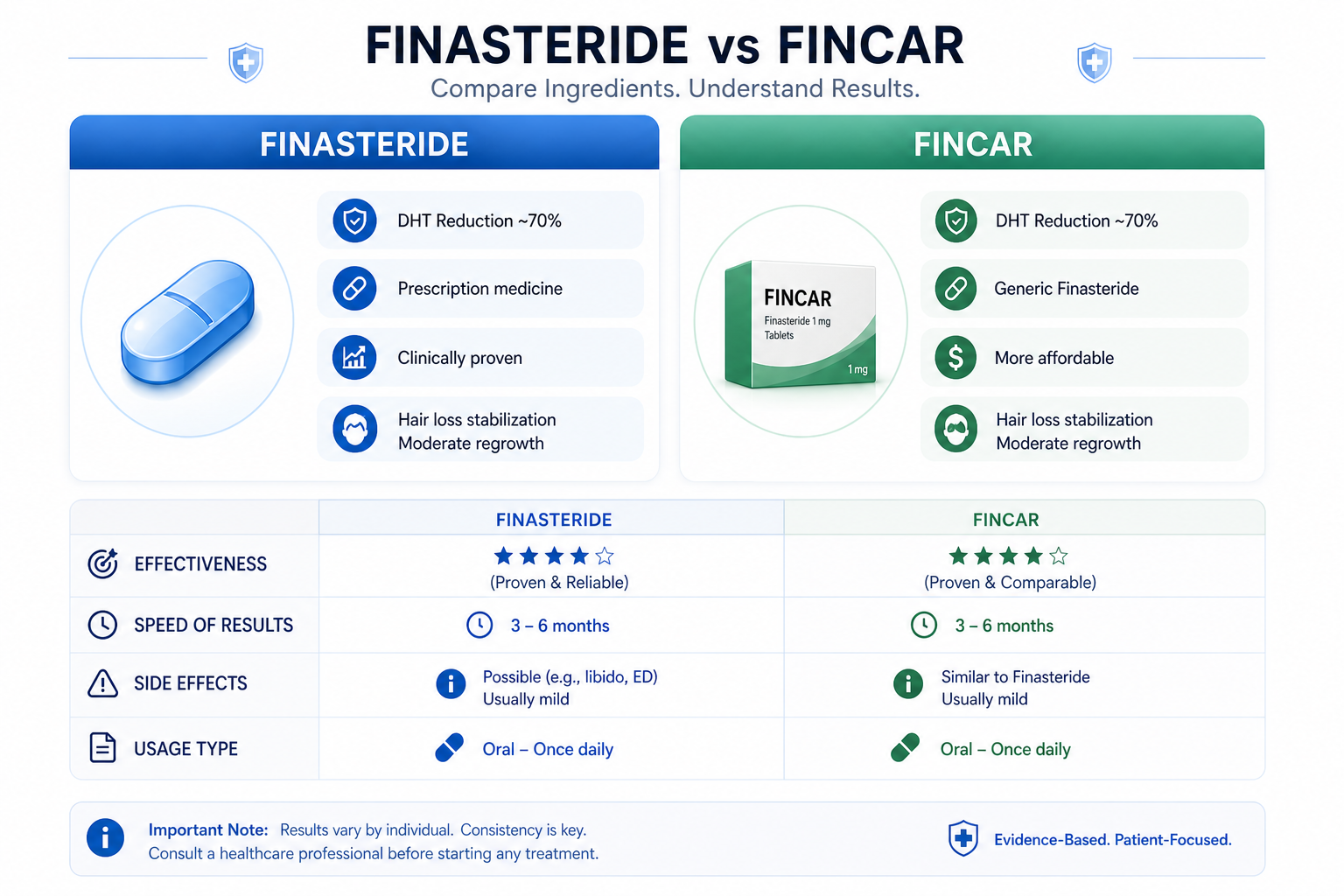
Quick Comparison
| Feature | Finasteride | Fincar |
|---|---|---|
| Active Ingredient | Finasteride | Finasteride |
| Common Strength | 1 mg | 5 mg |
| Primary Use | Male pattern hair loss | Often prostate use / off-label hair loss |
| Time to Results | 3–6 months | 3–6 months |
| Main Side Effects | Possible libido / sexual side effects | Same finasteride-related side effects |
| Cost | Usually higher branded pricing | Often lower generic pricing |
When Finasteride May Be Better
Standard 1 mg finasteride products are usually simpler for hair loss users because the dosage is already aligned with common androgenetic alopecia treatment plans.
- No tablet splitting often needed
- Designed specifically for hair loss market
- Convenient once-daily use
- Widely prescribed online and in clinics
When Fincar May Be Better
Fincar may appeal to budget-conscious users because it often costs less per mg. Some users divide 5 mg tablets into smaller doses for long-term savings.
- Often lower monthly cost
- Generic option in many markets
- Same active ingredient
- Popular among cost-focused users
Is Fincar the Same as Finasteride?
Fincar is a brand name product containing finasteride. The main distinction is usually tablet strength and market positioning. Many hair loss users compare Fincar 5 mg with standard 1 mg finasteride products.
Because dosing may differ, users should not assume tablets are interchangeable without proper medical guidance.
Compare Hair Loss Treatment Providers
Review pricing, consultations, prescriptions, and treatment plans online.
Compare OffersFAQ
Which works better: Finasteride or Fincar?
Effectiveness may be similar when equivalent finasteride doses are used, since both rely on the same active ingredient.
Why is Fincar cheaper?
Fincar is commonly sold as a generic-style product and often in higher-strength tablets, which can lower cost per mg.
Can I split Fincar tablets?
Many users do, but tablet splitting should only be considered with professional guidance.
Do results disappear after stopping?
Usually yes. Hair maintained through finasteride often declines after discontinuation.
Informational content only. Not medical advice.