Finasteride (1 mg) vs Proscar (Finasteride 5 mg) 2026 — Effectiveness, Dose Differences, Safety & Cost
Both treatments contain finasteride, but they are designed for different purposes. Finasteride 1 mg is commonly used for male pattern hair loss, while Proscar is a 5 mg brand product primarily approved for enlarged prostate. Some users compare them because both contain the same active ingredient.
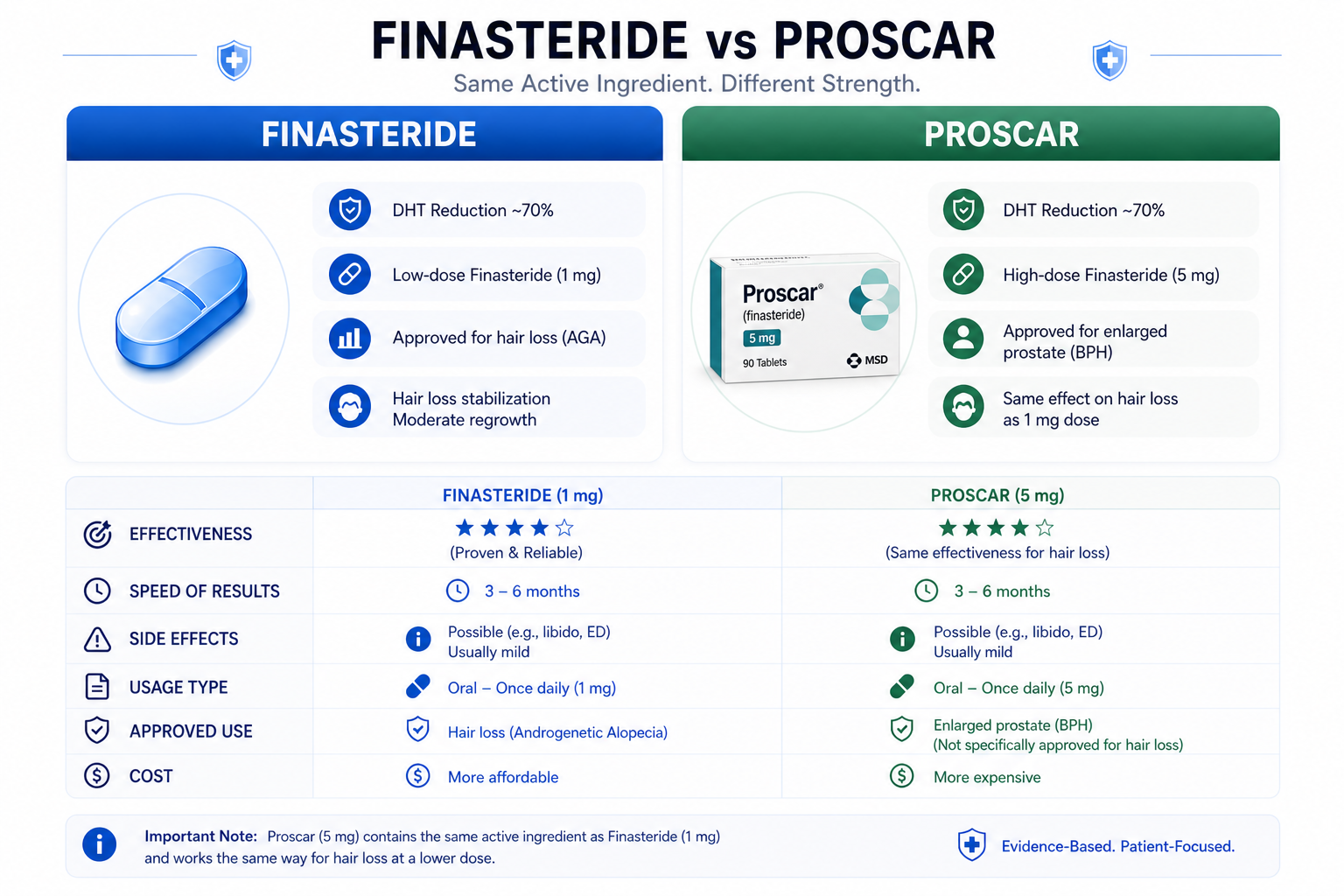
Quick Comparison
| Feature | Finasteride | Proscar |
|---|---|---|
| Active Ingredient | Finasteride | Finasteride |
| Common Strength | 1 mg | 5 mg |
| Main Approved Use | Male pattern hair loss | Benign prostatic hyperplasia (BPH) |
| Hair Loss Use | Standard option | Sometimes split for off-label use |
| Cost | Varies by provider | May be cost-effective per mg |
| Side Effects | Generally similar because active ingredient is the same | |
When Finasteride May Be Better
Standard finasteride 1 mg may suit users who want the dosage commonly prescribed for hair loss without tablet splitting.
- Designed for hair-loss treatment
- Simple once-daily dosing
- No tablet cutting required
- Widely available online
When Proscar May Be Better
Proscar may appeal to users comparing cost per milligram or those who already use it under medical supervision. It is primarily intended for BPH.
- Contains 5 mg finasteride
- Recognized brand product
- May reduce cost when divided
- Sometimes discussed for off-label use
Important Dosage Difference
The biggest difference is strength. Hair-loss treatment typically uses 1 mg, while Proscar tablets are 5 mg. Users considering Proscar for hair loss often discuss tablet splitting, but this should only be done with medical guidance.
Self-adjusting dosage without professional advice may increase risk of dosing errors.
Compare Hair Loss Treatment Providers
Review pricing, consultations, prescriptions, and treatment plans online.
Compare OffersFAQ
Is Proscar the same as Finasteride?
Proscar is a brand-name product containing finasteride 5 mg. Finasteride for hair loss commonly refers to 1 mg versions.
Which works better for hair loss?
Finasteride 1 mg is the standard dose commonly used for male pattern baldness.
Why do some people use Proscar?
Some users compare it for cost reasons because one 5 mg tablet may be divided, depending on physician guidance.
Are side effects different?
Since both contain finasteride, side effects are broadly similar, though dose may matter.
Informational content only. Not medical advice.