Finasteride (Propecia) vs Dutasteride (Avodart) 2026 — Effectiveness, DHT Blockade, Safety & Key Differences
Finasteride and Dutasteride are oral medications used to treat androgenetic alopecia by reducing DHT levels. Finasteride blocks one enzyme type, while Dutasteride blocks two, which may lead to stronger hair loss prevention.
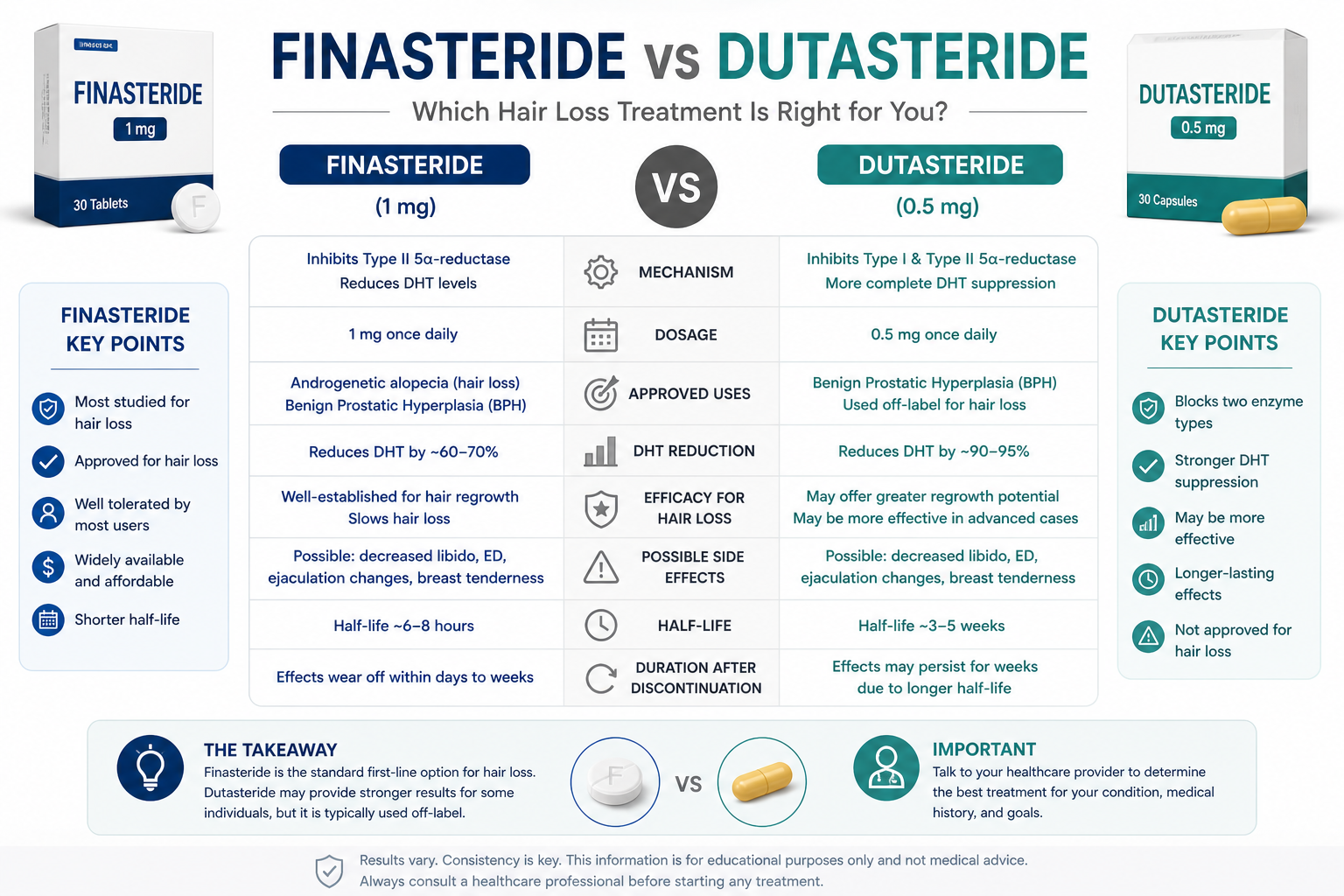
Quick Comparison
| Feature | Finasteride | Dutasteride |
|---|---|---|
| How it Works | Blocks type II 5α-reductase enzyme | Blocks type I & II 5α-reductase enzymes |
| DHT Reduction | ~60–70% | ~90%+ |
| Form | Oral tablet | Oral capsule |
| Best For | Mild to moderate hair loss | Moderate to advanced hair loss |
| Time to Results | 3–6 months | 3–6 months |
| Main Side Effects | Sexual side effects (some users) | Sexual side effects (may be slightly higher) |
| Half-Life | Short (~6–8 hours) | Long (~5 weeks) |
When Finasteride May Be Better
Finasteride is often used as a first-line treatment due to its long safety record and sufficient effectiveness for many users.
- Well-studied and widely prescribed
- Lower overall DHT suppression
- Shorter half-life
- Effective for early-stage hair loss
When Dutasteride May Be Better
Dutasteride may be more effective for those who need stronger DHT suppression, especially if finasteride does not provide sufficient results.
- More potent DHT reduction (~90%+)
- Blocks both enzyme types
- Often used when finasteride is insufficient
- Better for advanced hair loss
Can You Use Them Together?
No. Finasteride and Dutasteride should not be used together because they belong to the same class of medications and act on similar pathways.
Combining them does not significantly improve results but may increase the risk of side effects.
Compare Hair Loss Treatment Providers
Review pricing, consultations, and treatment options online.
Compare OffersFAQ
Is dutasteride stronger than finasteride?
Yes. Dutasteride blocks more enzyme types and typically reduces more DHT.
Which is better for hair loss?
Dutasteride may be more effective, but finasteride is often tried first.
Which has fewer side effects?
Finasteride may have a slightly lower risk due to less aggressive DHT suppression.
Do results stop after discontinuation?
Yes. Hair loss typically resumes after stopping treatment.
Informational content only. Not medical advice.