Propecia (Finasteride 1 mg) vs Dutasteride 2026 — Effectiveness, DHT Blockade, Safety & Key Differences
Propecia (finasteride 1 mg) and dutasteride are both 5-alpha reductase inhibitors used for androgenetic alopecia. Propecia is the standard FDA-approved treatment for hair loss, while dutasteride is a stronger DHT blocker originally approved for prostate conditions and often used off-label for hair loss. The choice depends on desired potency, risk tolerance, and medical guidance.
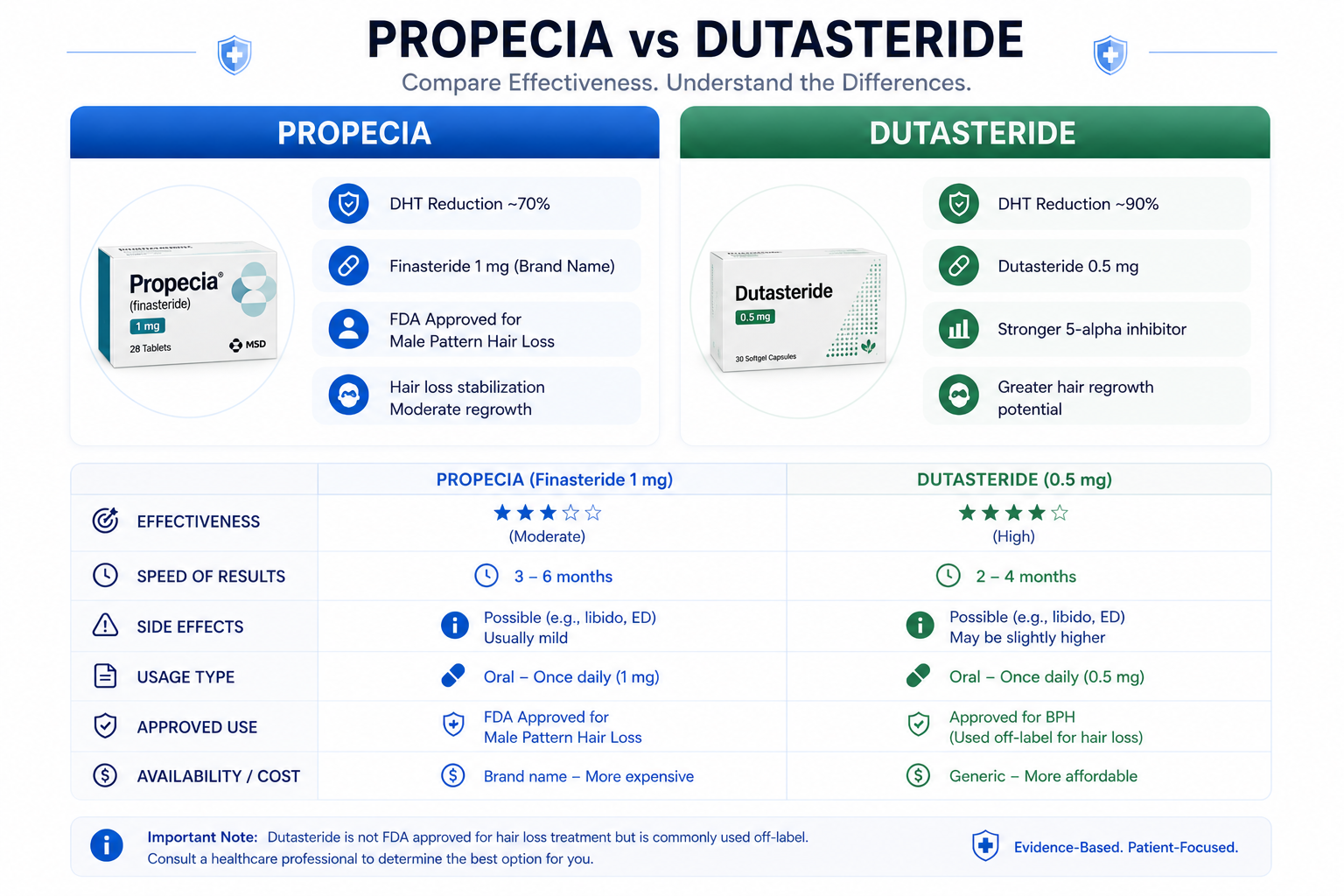
Quick Comparison
| Feature | Propecia (Finasteride 1 mg) | Dutasteride |
|---|---|---|
| How it Works | Blocks Type II 5-alpha reductase, reducing DHT levels | Blocks Type I & II 5-alpha reductase, stronger DHT suppression |
| Form | Oral tablet (1 mg) | Oral capsule (commonly 0.5 mg) |
| Best For | Early to moderate male pattern hair loss | More advanced or resistant hair loss cases |
| Time to Results | 3–6 months | 3–6 months (often perceived stronger regrowth) |
| DHT Suppression | Moderate (~60–70%) | High (~90%+) |
| Main Side Effects | Sexual side effects (some users), hormonal changes | Similar side effects, potentially more pronounced due to potency |
When Propecia May Be Better
Propecia is often preferred as a first-line treatment because it is well-studied, widely prescribed, and FDA-approved specifically for hair loss. It offers a more conservative DHT reduction, which may be suitable for long-term maintenance with a lower intensity approach.
- FDA-approved for male pattern baldness
- Standard first-line therapy
- Lower systemic DHT suppression than dutasteride
- Well-established long-term safety data
When Dutasteride May Be Better
Dutasteride may be more effective for users who do not respond well to finasteride, as it suppresses a broader range of DHT production. However, it is typically used off-label for hair loss and may require closer medical supervision.
- Stronger DHT inhibition
- Potentially better regrowth in resistant cases
- Longer half-life in the body
- Often used when finasteride is insufficient
Key Difference Between Them
Both medications target DHT, but dutasteride blocks more enzyme types, leading to stronger overall suppression. This can increase effectiveness in some users, but also raises considerations about side effect risk and long-term exposure.
In clinical practice, finasteride (Propecia) is usually tried first before considering dutasteride.
Compare Hair Loss Treatment Options
Explore prescription-based treatments and discuss options with a healthcare provider.
Compare OffersFAQ
Is dutasteride stronger than Propecia?
Yes. Dutasteride suppresses more DHT and is generally considered more potent than finasteride (Propecia).
Why is Propecia used first?
Because it is specifically approved for hair loss and has a longer-established safety profile for this use.
Can you switch from Propecia to dutasteride?
Yes, under medical supervision, especially if finasteride does not provide sufficient results.
Do both treatments stop hair loss permanently?
No. Results usually depend on continued use; stopping treatment typically leads to gradual reversal.
Informational content only. Not medical advice.